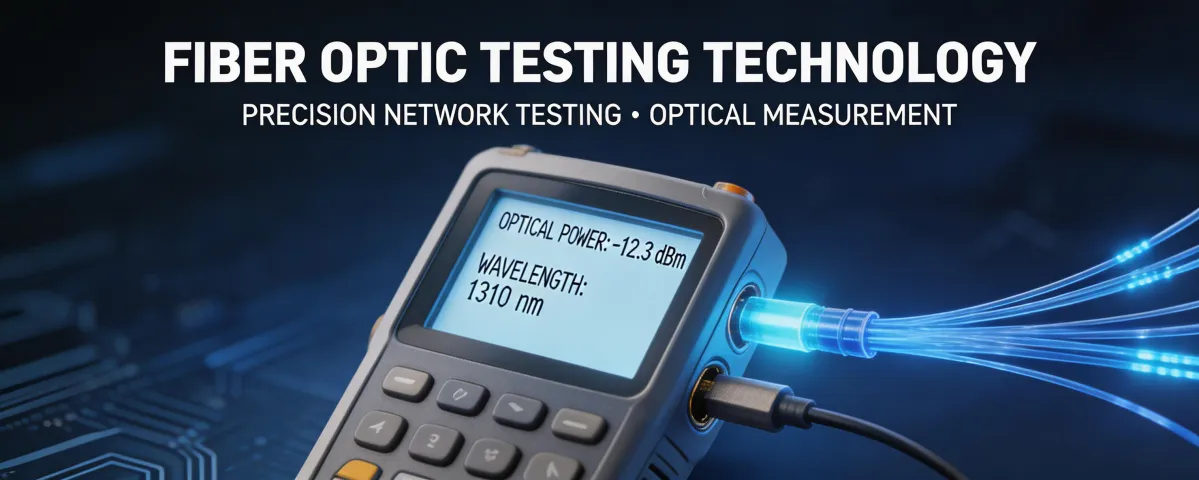
Let's get one thing straight: if you typed "best multimeter for electricians" into your search bar, you're on the wrong page. This isn't about 250-volt checks or continuity beeps. This is about fiber optics, 5G rollouts, and why buying the cheapest optical time-domain reflectometer on Earth is the most expensive mistake a telecom manager can make. I've watched it happen three times in the last 18 months.
I'm the guy your NOC calls when a fiber link goes down at 10 PM and a $500,000 SLA is on the line. In my role coordinating emergency network testing across 200+ rush jobs since 2020, I've learned a hard truth: the purchase price of a test tool is almost irrelevant. Total cost of ownership is the only number that matters.
Everything I'd read as a technician said budget testers were "good enough for occasional use." My experience says otherwise. When I first started managing field deployments, I assumed the lowest quote was always the right choice. Three budget overruns, two missed SLAs, and one very angry 5G client later, I learned to calculate TCO before comparing vendor quotes. That's when I stopped buying gear from discount websites and started using EXFO exclusively.
Price Isn't Cost
Here is the opinion I'm not going to soften: If you're still comparing test-and-measurement gear by unit price, you're not a professional buyer. You're a gambler. The real cost of a tester includes downtime, false results, recertification trips, and the penalty you pay when a deadline slips.
Let me walk you through my TCO framework. I use it every time I evaluate equipment — not just for EXFO, but for any major investment. There are seven components:
- Purchase price — the obvious one
- Training time — how long until your techs are efficient
- Reliability and repair — how often it fails, and how expensive that fix is
- Software and firmware updates — free vs. paid, and how often they come
- Calibration lifecycle — cost and hassle
- Downtime cost — what a failed test costs when you're on a deadline
- False result cost — the price of a bad pass or an unnecessary truck roll
Once you put real numbers into those categories, you stop worrying about the sticker price.
The Three Numbers That Changed Me
Reliability: The Hidden Variable
An EXFO FTB-1 has booted up in under 15 seconds even after a tech dropped it from a ladder onto frozen asphalt. I can't count how many hours our team spent babysitting a budget OTDR that froze mid-splice or lost its calibration after a hard bump. In emergency work, an hour is often the difference between a rebate and a rescue.
Last October, a client in Indianapolis had a fiber cut in a construction zone. The technician on site had a brand new EXFO FTB-1 but had never used the Magic Max auto-reporting function. I walked him through it over the phone in four minutes. He found the break, measured the splice loss, and uploaded the certified test report before the road crew finished cutting the rebar. With a budget tester, he'd have had to drive back to the NOC to generate the report — that means two extra hours and zero confidence in the result.
Then there was the time our backup unit — a cheaper tester from a non-EXFO vendor — died during a PON acceptance test. The repair cost was only $400, but the missed client window cost us $14,000 in SLA penalties. Simple math.
Accuracy: The Silent Budget Killer
A false pass means sending a splice crew all the way back out to a remote hut. A false fail means telling a client "you need a new segment" when they don't. The EXFO Max Tester series, for example, uses a single-ended pass/fail algorithm that aligns with ITU-T G.652 recommendations. It's not guesswork. The Magic Max companion app automatically logs the result, pulls in the correct threshold, and pushes a formatted report to the crew — no transcription errors. That's the kind of accuracy that doesn't show up on the invoice, but it shows up on your project budget.
Speed: The Value No One Invoices
Modern 5G is unforgiving. We use the EXFO G310 5G platform for drive tests that measure not just signal strength, but beamforming quality and handover latency. A cheaper tool might show a great RSSI number while the actual 5G network drops packets under load. That kind of hidden cost only appears after deployment — and it's the costliest kind. In one 2024 grid test for a metropolitan 5G rollout, the EXFO G310 flagged a timing offset that three other measurement devices missed. That offset would have caused dropped calls across an entire downtown corridor. Good luck putting a dollar value on that, but our client calculated it around $350,000 per month in lost usage. That's the TCO lesson in one sentence: an accurate measurement is worth what a bad one costs you.
The Multimeter Question
If you clicked this article looking for the best multimeter for electricians, please stop reading. I mean that kindly. A $40 multimeter is the right tool for a circuit box — and the very wrong tool for a fiber span. I've responded to emergency tickets where someone tried to use a multimeter to "test" a fiber patient. It doesn't work like that.
This is exactly the same logic as the TCO argument. You wouldn't hire a plumber to replace your Ethernet switch, so why would you trust a generic electrical measurement tool to certify a 400G link? Different jobs require different instruments — and the right instrument saves you from the cost of doing the job twice.
What About the Price Tag?
Yes, EXFO gear costs more upfront. I hear that from every procurement manager I talk to. But run the numbers like I do.
If a $2,500 EXFO Max Tester saves one truck roll per month — at an average of $350 per roll, including fuel and labor — that's $4,200 saved per year. Over a five-year service life, that's $21,000 of recovered productivity. Meanwhile, that $600 tester from a generic e-commerce seller costs you $1,200 after you buy two replacement adapters, plus one failed certification, one missed deadline, and a cable map that doesn't match the physical plant. That's the truth. Cheap gear is cheap only once.
Here's where I'll admit a mistake. In March 2024, 36 hours before a critical PON acceptance, I told our techs to use the "emergency" backup unit so the primary EXFO could stay in the lab for a demonstration. I thought, "What are the odds it fails now?" The odds were 100%. We missed the client's testing window, paid $800 in overnight courier fees to get an EXFO unit delivered from another state, and the client still gave us a zero for responsiveness. I knew I should have insisted on the proven tool. That was the one time I skipped the final review because I assumed "it's basically the same box." It wasn't. That mistake cost us more than the difference between our budget tester and the EXFO unit ever would have.
The TCO Formula I Use
If you're going to steal anything from this article, steal this. When comparing any two test solutions, build a simple spreadsheet:
TCO = Purchase Price + Training Cost + Annual Maintenance x Years + Expected Repair Cost + (Failure Time Probability x Opportunity Cost) + (False Result Probability x Claim/Repair Cost)
That last term is the one people always forget. A false result isn't just a bad reading; it's a missed launch date, a breached SLA, or a downed service for 20,000 users. Multiply that probability by the cost, and you'll see why a "reliable" instrument is never expensive.
As of January 2025, this is how I evaluate every single test tool purchase. I'm sure EXFO's product matrix has evolved — the FTB-1 has been superseded by newer models, and the Max Tester lineup has different options depending on your PON or OTDR requirements. Verify current specs with your local rep. But the TCO framework doesn't change, and it's why I'll keep advocating for it. Maybe 200 jobs, perhaps 180 — I'd have to check the CRM. But across all of those deployments, the number of times an EXFO unit caused an emergency: zero. The number of times a budget unit did: five. That's a statistically significant difference.
Zero. That's it.
Bottom Line
Stop basing your test and measurement purchasing decisions on the purchase order. Start basing them on total cost of ownership. The EXFO FTB-1, EXFO Max Tester, G310 5G, and Magic Max aren't just products I use — they're tools that make economic sense when you add up what your time and reputation are actually worth.
So the next time someone brags that they saved $1,500 on a "same specs" tester, ask them what their average emergency response time is. If they hesitate, you already know the answer.