Last spring, our network engineering lead walked into my office and dropped a one-page spec sheet on my desk. "We need one of these," he said. "And we need it before the Q3 rollout."
It was an EXFO OTDR tester. Except I had no idea what that was. I'm the office administrator—I handle procurement for roughly 400 employees across three locations. I buy chairs, laptops, catering, and the occasional whiteboard. I do not buy fiber optic test equipment.
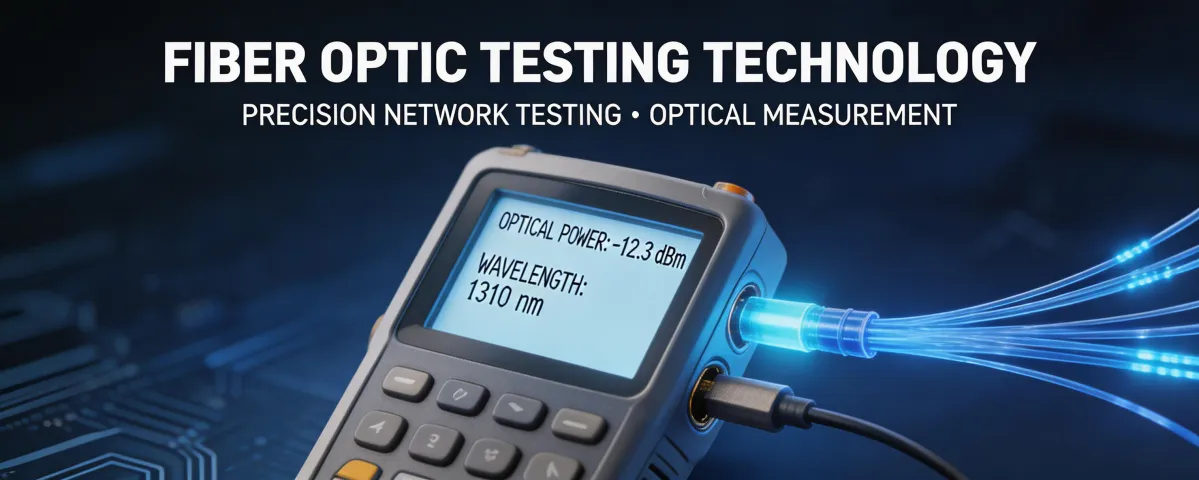
Turns out, OTDR is not a made-up acronym from Star Trek. It stands for Optical Time-Domain Reflectometer (I had to Google that). It's the tool technicians use to characterize and troubleshoot fiber optic links. If you've got fiber running between buildings—and we do—you need one at some point. The spec sheet in my hand was for the EXFO FTB-1 Pro, a modular platform that lets you swap in different test modules depending on what you're measuring.
I mention this because buying that EXFO OTDR tester taught me more about procurement, and about how I was doing my job, than just about any purchase in the last five years. And I'd like to think I saved myself from repeating the same mistakes.
The Assumption I Walked In With
When I first started managing vendor relationships, I assumed the lowest quote was always the best choice. I carried that assumption straight into this purchase. I looked at the EXFO FTB-1 Pro price tag, compared it to alternatives on paper, and winced.
The FTB-1 Pro with a suitable OTDR module was priced well into five figures. I remember thinking: there's no way we're paying that. I told the network lead we could find the same thing cheaper from another manufacturer.
"Sure," he said, with that patient look engineers give non-engineers. "Find me one that survives being dropped from a ladder and gives me the same data quality."
I didn't love the attitude. But he had a point I'd encounter in every subsequent conversation: network equipment is not an office chair. The failure mode isn't "uncomfortable for eight hours." The failure mode is "a technician drives to the middle of nowhere to run a test, the tool gives them ambiguous data, and they have to drive back, re-test, and explain the delay to a customer."
The Research Phase
I'll spare you the full vendor landscape, but I did my due diligence. We looked at EXFO and we looked at two other manufacturers. I'm not going to name them—they make solid gear, and the brand doesn't matter for this lesson. What matters is what I learned about how the EXFO FTB-1 Pro actually works.
The FTB-1 Pro isn't a single-purpose gadget. It's a platform. The base unit is a touchscreen console that accepts different modules: an OTDR module for fiber characterization, a PON power meter for FTTx networks, an optical spectrum analyzer for DWDM systems, even a fiber inspection microscope. For a mid-sized telecom services firm like ours that runs everything from short enterprise links to metropolitan dark fiber, that modularity is a big deal. Instead of buying three separate devices and training people on three different interfaces, you buy one platform and add modules as the network grows. (We also run a mixed environment that includes Cisco switches and HPE servers—so the fewer proprietary tools we have to juggle, the better.)
The other thing that surprised me was how much the software matters. Modern OTDR testing isn't just "send a pulse, see a trace." The EXFO units have automated pass/fail analysis, reporting features, and cloud connectivity. Our technicians can run a test in the field, generate a report, and upload it before they leave the site. That sounds like marketing fluff, but our lead engineer had used the exact workflow at a previous employer (this was back in 2023), and he'd seen it cut troubleshooting time from days to hours.
Meanwhile, the cheaper units I was comparing had some gaps. A few had fewer measurement features. Others had an interface that felt surprisingly dated. Honestly, the best comparison I can give is flip phones. The older-style testers are like flip phones: they work, they make calls, and nobody is impressed when you pull one out. The FTB-1 Pro is closer to a modern smartphone—not because it's flashy, but because the interface, the ecosystem, and the workflow make everything faster. I get why some teams stick with the old way; if you only need one measurement a month, a flip phone is fine. But if your techs live on these tools, the modern interface isn't a luxury. It's productivity.
The Turning Point
Here's where the story gets real. In mid-2024, we had a contract where we needed to certify a long fiber run for a customer—on a strict timeline. My "budget-friendly" trial unit (yes, I bought a cheaper one first, against the engineer's advice) failed to produce a clear trace at long distances. Wait, let me rewind.
I should add that the cheaper unit wasn't a total waste. It came in handy for short indoor runs—maybe 500 meters, perhaps 600, I'd have to check the log. But for the long outdoor spans, it was unreliable. The trace was noisy. The technician was frustrated. The customer was waiting.
We expedited an EXFO FTB-1 Pro with a high-dynamic-range OTDR module and got it overnight. Rush shipping cost us a premium—that one was on me, and it was a painful but fair outcome. The first test run produced clear, unambiguous data on the same link the other unit had failed on. The report generated automatically. The customer approved the certification the next morning.
(Should mention: the EXFO unit came from one of our regular vendors, so we'd already established invoicing terms. That mattered more than I can say. In my experience, the last thing you want during a deadline crisis is an accounts-payable problem. I learned that lesson the hard way in my first year, when a vendor's handwritten receipt got a $2,400 expense rejected by finance. Never again.)
What This Taught Me
So, what is an OTDR tester, really? It's a precision instrument. But for an admin buyer, the more useful question is: what is the total cost of an OTDR purchase? It's not just the unit price. It's the training time. It's the cost of a failed test in the field. It's the cost of a customer who questions your data because your trace looks like noise. It's the hours your engineer spends re-running tests instead of doing other billable work.
To be fair, I still believe in respecting budgets. I get why people go with the cheapest option—budgets are real, and not every team needs a flagship platform. But in our case, the EXFO FTB-1 Pro ended up being the more efficient choice. And efficiency, especially in a services business, is a competitive advantage. That's not a slogan; it's the thing that got a customer certified on time and kept the relationship intact.
I also learned something about my own role. My job is to make sure the company gets the right tool for the work. When I first started in procurement, I assumed that meant "the best deal." But the best deal is the one where the tool does the job, the vendor can deliver, and the invoice is clean. The FTB-1 Pro cost more on paper. It was cheaper in reality.
If You're the One Doing the Buying
- Ask the person who'll actually use it. The network engineering lead understood OTDR testers better in five minutes than I did in a week of research. My job was to challenge the price, not the requirement.
- Understand what the device is for. What is an OTDR going to be used for in your environment? Short enterprise links, long outdoor spans, or both? That determines the module and the dynamic range you need.
- Think about the platform, not just the module. The EXFO FTB-1 Pro is a long-term investment. The base unit will probably outlast your current rollout, and you can swap modules as needs evolve.
- Verify invoicing capability before you order. That's a story I'll never stop telling. A cheap price means nothing if finance won't accept the paperwork.
- Factor in the flip-phone tax. If your techs are using clunky tools, they'll eventually demand something better—or they'll quietly avoid field calls altogether. A modern interface is a productivity decision, not a vanity purchase.
Final Thought
Six months after the purchase, the EXFO FTB-1 Pro has been used on at least two major rollouts. Maybe three, I'd have to check the booking system. Not one technician has complained about it. That's rare for any tool.
I came into that requisition thinking it was a simple purchase: find an EXFO OTDR tester, find a price, buy it. I left with a different approach to procurement entirely. I stopped asking "what's the cheapest?" and started asking "what's the cost of being wrong?" The answer to that question, I've learned, is usually a lot more than the price difference.
So if you're an office manager or admin buyer who just got handed a spec sheet with "EXFO" written on it: don't default to the lowest quote. The engineers already did the research. Your job is to make sure the vendor is real, the invoice is clean, and the delivery date actually holds. And if someone hands you a requirement that seems over-specified, remember the flip phone. It worked—until the day it didn't.