Office administrator for a 14-person fiber contractor. That's my official title. What it really means: I order the equipment, and then I own the decision. I report to operations, who wants short truck rolls, and finance, who wants small POs. It took me four years and roughly 70 purchase orders in this role to understand that the lowest number on a quote is rarely the lowest cost in the budget.
This is a comparison between two EXFO options: the EXFO MaxTester 730C and an EXFO XGS-PON test solution. Both are legitimate tools. They aren't competing versions of the same thing. They solve related but different problems. Per FTC guidelines (ftc.gov), claims like best need to be truthful and substantiated. So here's my attempt to substantiate the word.
What This Comparison Is (and Isn't)
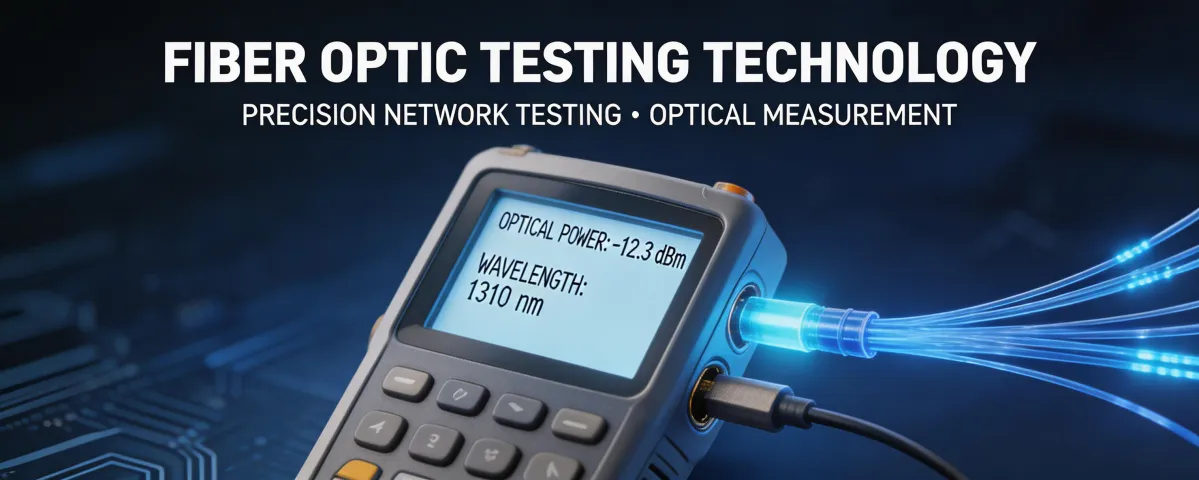
The MaxTester 730C is a handheld OTDR designed for access networks. Many configurations include a PON power meter and a visual fault locator. It's the kind of tool a field tech can carry with one hand and use on a ladder.
The EXFO XGS-PON solution I looked at is a module-based analyzer. It gives you protocol-level testing for 10G symmetric PON, automated pass/fail, and deeper reporting. It is not the same tool as the 730C. It is a different category with a different price tag.
So what matters? Four things: network type, total cost, connectors, and workflow. Not marketing pages. Not the size of the logo on the case.
Dimension 1: What Your Network Actually Runs
If most of your work is GPON or EPON, the 730C is a natural fit. Its OTDR finds the bad splice. The PON power meter verifies the optical signal at the drop. You get the physical layer plus a practical pass/fail check in one box.
If your work is XGS-PON, you need to know whether the tester can verify the upstream burst mode and the 10G downstream signal. A dedicated EXFO XGS-PON analyzer can do that. The 730C, in most configurations, is not a deep XGS-PON protocol analyzer.
Here's the part that surprised me. For many XGS-PON installs, the 730C might still be the better first purchase. Why? Because the OTDR tells you where the problem is. The XGS-PON analyzer tells you that the link is up or down, but it doesn't tell you which connector has dust on the ferrule. A bad fiber plant will fail an XGS-PON test no matter which expensive box is doing the test. The tool that finds the bad splice will save the truck roll.
Dimension 2: The EXFO MaxTester 730C Price vs. Total Cost
EXFO doesn't publish the MaxTester 730C price on its website. I had to ask for quotes. I'm not 100% sure what today's price is, but here's what I was quoted in Q4 2024: the 730C came in around $7,200 with the SC/APC adapter kit on the quote. The XGS-PON analyzer was more than double. Don't hold me to those numbers. Pricing changes and configurations vary. The gap between the two, though, is real.
Any spreadsheet can compare two list prices. Harder to compare is what each tool costs after the purchase. The real question is not what you pay at checkout. It's what you pay after a technician drives to a site, runs a test, doesn't find anything, and drives back.
One example: our team once spent an hour chasing an intermittent XGS-PON failure. The link looked fine on the analyzer. A cleaning stick and 30 seconds fixed it. The connector was dirty. That cleaning stick costs about $5. The wasted hour, with truck roll and overhead, was closer to $120.
Why the Multimeter Isn't a Substitute
Someone in finance asks this every year: why can't our techs use a multimeter? It's a fair question if you've never looked at a fiber end face.
A multimeter tests voltage, continuity, and resistance. It will not measure optical power. It will not detect a dirty connector. It will not tell you whether a PON drop is delivering light. It is the right tool for copper and the wrong tool for fiber. Save the $60. Lose the savings on the first repeat truck roll.
Not a substitute. Not a workaround. A multimeter in a fiber world is a paperweight.
Dimension 3: Connectors: The Small Part That Decides Success
Connectors are where this purchase gets messy. The 730C I priced used SC/APC adapters. Many PON networks use SC/APC on the drop side. Some premises use SC/UPC. Patch panels and XGS-PON optics can vary. If you order the wrong adapter, you can't test anything until a $15 part arrives by overnight shipping.
Looking back, I should have verified the connector type before approving our first 730C order. At the time, I saw fiber tester and assumed the correct connector was included. It wasn't. A lesson learned the hard way.
Dirty connectors are another hidden cost. A smudge on the ferrule can look like a reflective event on an OTDR trace. A technician who doesn't clean and inspect the connector will waste time chasing a problem that doesn't exist. This is why connector inspection matters. The best EXFO tester for your crew is the one that supports a quick inspection step before every connection.
Clean the end. Check the polish. Then test. That's it.
Dimension 4: Workflow (And Whether the Tool Gets Used)
The best tool in the van is the one that gets used. The 730C boots quickly and saves results in a format my techs can email from the field. That sounds minor, but it's not. If a tool requires a two-week class before anyone feels comfortable, it's going to sit in the back.
To be fair, the XGS-PON analyzer has more capability. If your contract requires automated pass/fail reports for every XGS-PON port, the deeper reporting is worth the money. If not, the 730C's simplicity is a real feature. A complicated tool that gets left in the van doesn't deliver any value.
One more workflow note: know what your customer will accept as proof. Some operators want the detailed XGS-PON log. Others just want an OTDR trace showing the fiber is good. If you don't know that yet, ask before you spend.
So Which EXFO Is Best for You?
After four years of purchase orders, I've landed on a simple rule: best is not a product category. Best is a match.
- If you are an FTTH contractor doing a mix of GPON and starting to see XGS-PON, buy the EXFO MaxTester 730C first. It covers most installs and finds the physical faults.
- If you are an operator turning up hundreds of XGS-PON lines and need protocol-level verification, invest in an EXFO XGS-PON analyzer. Pair it with training and cleaning tools.
- If finance is pushing for the cheapest number, do not buy a multimeter. It won't test fiber. It will cost more in wasted time than the EXFO quote would have cost.
Granted, this is a simplification. The right choice depends on your network mix, technician skill, and reporting requirements. But the principle is the same: look at the total cost, not the sticker price.
It took me about three years and one expensive mistake to understand this. The difference between a cheap test and an accurate test shows up later, in fewer truck rolls and cleaner reports. That's the best EXFO purchase I can recommend.