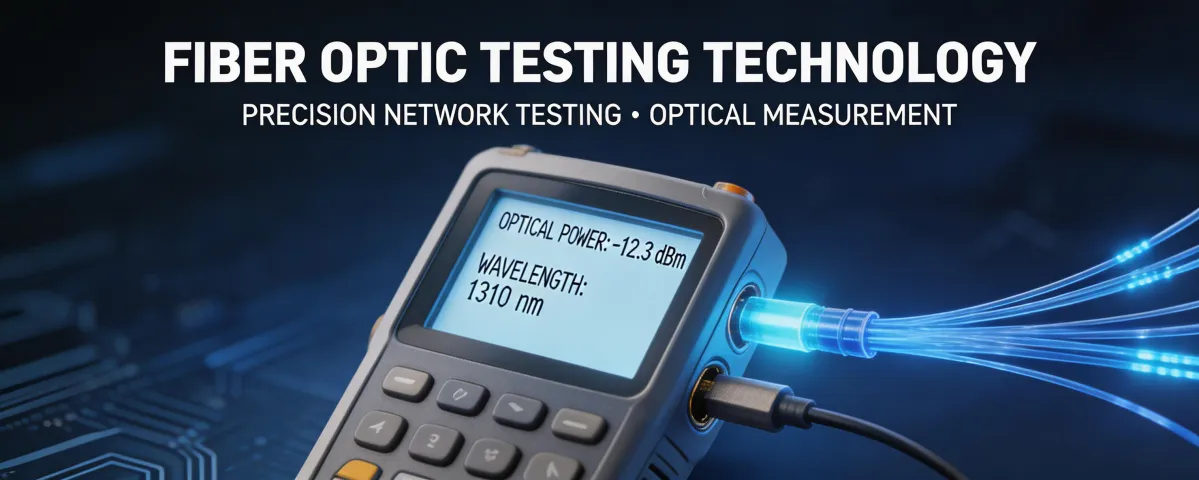
If you're trying to choose between EXFO and Cisco, you're asking the wrong question. They're not competitors. I manage equipment purchasing for a 300-person network operations team, and I've bought both Cisco switches and EXFO testers. The real decision isn't 'EXFO vs Cisco'—it's deciding which EXFO tester your team actually needs. That's usually the FTB-1 Pro, sometimes the compact C210, and often the 3210 OTDR module.
Cisco makes network infrastructure—switches, routers, access points. EXFO makes test and measurement gear. They're complementary, not interchangeable. A Cisco switch tells you if a link is up; an EXFO tester tells you if the fiber is certified. I learned this the hard way in 2023, when a field engineer reported a link was 'fine' because the Cisco device was passing traffic. Our EXFO tester found a reflection event at a splice that was degrading the link. The switch couldn't see it. That's the whole argument.
What I Do as an Admin Buyer
I handle orders for all field equipment—45 to 60 POs a year across 12 vendors. When I took over purchasing in 2020, I almost bought a tester based solely on price. The vendor couldn't provide proper documentation, and finance rejected the invoice. I had to eat $1,200 out of our department budget. Since then, I verify test capabilities and calibration certificates before ordering anything.
The EXFO Testers I Keep Ordering
FTB-1 Pro
The FTB-1 Pro is the modular platform we use for most certifications. It's expensive—around $8,500 for the base unit, maybe $7,900, I'd have to check the last quote—but the modularity saves us over time. Instead of buying separate machines for OTDR, power meter, and light source, we buy one frame and swap modules. If a module fails, we replace just that module. Our team has been using the same frame for 3 years.
EXFO C210
The C210 is the simple one—a compact optical power meter. It's not fancy, but it's cheap and rugged. I order a few of these for quick checks and basic PON troubleshooting. Every technician can carry one in their bag. No training needed. For verifying a connector's output level, that's enough.
The 3210 Module
When someone says 'exfo tester' for serious OTDR work, they usually mean the 3210 module. It drops into the FTB-1 Pro and gives you full trace analysis, event detection, and link certification. It's not a cheap add-on, but if you're billing jobs based on compliance, you need it. After I signed the PO for our first 3210 module, I kept second-guessing. What if the team preferred a different brand? Didn't relax until the first field report came back with a clear event table.
How to Choose (From an Administration Perspective)
Here's the checklist I use when a manager asks for a new tester:
- What standard do you need to meet? If it's TIA-568.3-D or Telcordia GR-196, you need an OTDR-based certifier, not just a light meter.
- Will the testers be shared or assigned? If assigned, C210s for everyone and one FTB-1 Pro per team.
- What's the total cost of ownership? The cheapest upfront unit may fail on calibration or software updates. EXFO's support has been reliable for us, but I always add 15% for accessories and yearly calibration.
When Cisco Does Enter the Picture
There's one area where the line blurs: if you're using Cisco's digital network architecture, you might get basic optical monitoring from their pluggables. That's useful for real-time health, but it's not a replacement for a physical-layer certification. I'd never let a switch be the sole proof that a fiber link meets spec. The customer deserves a test that follows the standard, not a 'link is green' indicator.
One Caveat
Not every situation needs this level of equipment. For a small job with a single fiber that just needs a quick pass/fail, the C210 is enough. And if you're already in a Cisco environment with pluggable optics, you can get away with using those optics for basic monitoring until a client demands formal test reports. But if you're certifying new links for a living, the FTB-1 Pro with a 3210 module will earn its keep. (Yes, I've made the mistake of buying cheap first—the invoice rejection taught me that.)