As a field tech, I've learned the hard way that the tool in your hand matters less than the tool your job actually requires. I've documented 21 significant mistakes in 8 years of service work, and they cost roughly $42,000 in rework and delays. I'm sharing this because I want you to avoid the most embarrassing one: expecting a fiber tester to behave like a multimeter, or vice versa.
In this comparison, I'm putting the EXFO 715B next to a 117 multimeter. Both are solid pieces of test equipment, and both earned space in my truck. But they're not competitors. They're specialists. The framework I'll use is simple: what they measure, how you connect them, and where each one fails. By the end, you'll know exactly when to grab the 715B and when to grab the 117.
The Comparison Framework: Light vs. Electricity
Before I started my pre-job checklist, I treated these two tools as interchangeable. Looking back, it's embarrassing. The way I see it, the comparison has three dimensions—measurement type, physical connection, and failure scenarios. Each one gives a clear verdict.
Dimension 1: What the EXFO 715B and a 117 Multimeter Actually Measure
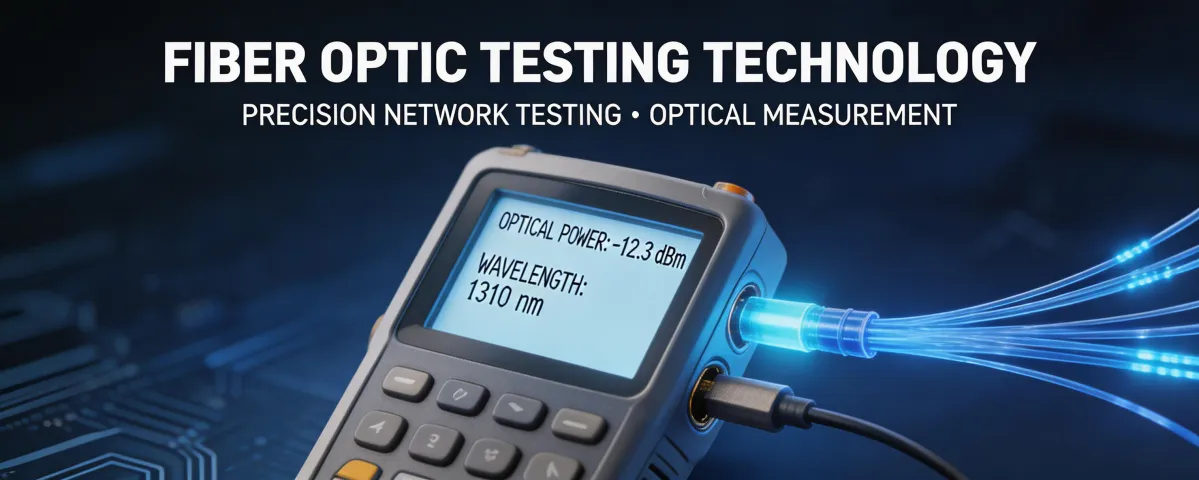
An EXFO 715B is a fiber-optic tool. Depending on the configuration, it can launch light into a fiber and read the return signal to find loss, splices, and faults. That makes it indispensable on telecom and data center fiber jobs. The 117 multimeter, by contrast, measures electrical values like voltage, resistance, and capacitance. They both have a screen and buttons. That's where the similarity ends.
The clearest example is checking capacitors. I remember staring at an AC unit that was tripping because of a weak capacitor. I had the EXFO 715B in the truck because I knew the property also had fiber runs. I packed it “just in case.” Then I stood there with a fiber tester, mentally trying to will it to read microfarads. It didn't. The 117 gave me the answer in seconds.
How to Test a Capacitor with a Multimeter
If your multimeter has capacitance mode, this is the routine we use:
- Disconnect the power and let the capacitor discharge through a resistor. I keep a 10 kΩ resistor in my pouch.
- Turn the dial to the capacitance symbol, usually µF.
- Connect the probes to the terminals. Polarity matters for electrolytic capacitors, so watch the markings.
- Compare the reading to the rated value on the side. A capacitor that reads more than 20–30% below its rated value is usually shot.
Would the EXFO 715B do any of this? No. It's not designed for electrical components. And that's okay. Honestly, I'm not sure why it took me so long to accept that. My best guess: I wanted one “super tool” because carrying one device was easier than carrying the right ones.
Dimension 2: How You Connect to Each Tool
The physical connection tells you a lot. The EXFO 715B connects to fiber patch cords through adapters like SC or LC. The glass cores must be clean, and the end faces need care. The 117 multimeter connects through test leads and probes to electrical terminals, capacitor legs, and wires. That difference seems obvious, but in a hurry, it's easy to ignore.
I once tried to use a fiber launch cable from the 715B to touch a capacitor's terminals. The metal connector looked like a probe. Turns out, a fiber adapter with metal parts is still not an electrical probe. It didn't measure anything except my embarrassment.
The opposite mistake is worse: using a multimeter to verify an optical signal. I assumed “same specifications” meant identical results across tools. Didn't verify. Turned out a 117 multimeter cannot detect laser light in a single-mode fiber. It showed no voltage, so I marked the fiber as bad. It turned out the receiver was just offline. That mistake cost me a $450 trouble call and a three-day delay.
Dimension 3: Where Each Tool Fails You
Every test tool has a blind spot. Knowing the blind spot is part of the job.
- The EXFO 715B fails you if you're chasing an electrical or capacitor fault. It's a light-based instrument. It can't tell you whether a capacitor is shorted, a power supply is sagging, or a relay closed properly.
- The 117 multimeter fails you if you need a fiber trace or optical loss result. It can't see light, and its test leads are made for copper, not glass.
My worst example was a data center outage. I checked power with the 117 and everything looked fine. I packed up, drove an hour back, and got a call that the link was still down. The issue was a bad fiber patch panel. I had the EXFO 715B in my truck. I just didn't take it out because I'd already decided this was an electrical problem. That's not a tool failure; it's a thinking failure. It cost about $3,200 in wasted dispatch time and a week of “we need to trust you” meetings.
After that, my team created a pre-check list. It's not complicated. It asks one question first: am I testing light or electricity? Fiber links and optical network equipment? EXFO. The AC capacitor or power supply? Multimeter. We've caught 17 potential mismatches in the last 18 months, and I'm guessing every one of those would have been another wasted visit.
The Choice Advice: Respect the Boundaries
When I called EXFO America Inc. to ask about a 715B that wasn't reading a capacitor, the support person didn't try to sell me a universal device. They told me, calmly, that the 715B is for optical testing, and if I need to test capacitors I should use a suitable multimeter. That answer earned my trust more than any “this tester does everything” pitch ever could.
So which one should you choose? Depends on what you're doing:
- If you're installing or troubleshooting fiber-optic cabling, you want the EXFO 715B or comparable EXFO test equipment. It's the specialist for light-based networks.
- If you're working on electrical circuits, power supplies, or capacitors, you want a 117 multimeter or similar electrical meter. It's the specialist for electrical diagnostics.
- If a vendor tells you one device can replace both, ask them to prove it. Professionals know their boundaries.
In my experience, the more useful message is “this isn't my strength; use this instead.” The EXFO 715B is not a multimeter, and a 117 multimeter is not an optical tester. Once you accept that, you'll stop wasting time, money, and credibility. That's the lesson I keep re-learning, one check at a time.