The call came in at 11:47 PM on a Tuesday in March 2024. A major hospital network—we'll call it HeartGuide Regional—was hours away from their 48-hour go-live deadline for a newly provisioned 7.1. The lead engineer sounded seriously stressed. 'The Cisco stack shows everything green,' he told me, 'but our biomedical sensors read sporadic packet loss at the edge. Operations thinks we need to shift the entire go-live.' Shifting would cost them an estimated $50,000 in penalties and delay patient monitoring upgrades by another quarter. That's when I convinced them to stop trusting the network's self-diagnosis and start testing it properly.
In my role as an emergency response specialist coordinating telecom field diagnostics, I've handled over 400 such panic-button rush orders in ten years. My go-to? A suite of EXFO test equipment. Here's what we found that night, and why it taught me a critical lesson about the limits of even the best Cisco-centric monitoring tools.
The 11:47 PM Reality Check
Back in the 2010s, a lot of network engineers believed that if the switch gear showed green, the fiber plant must be fine. That assumption was more or less okay then—you were running under-utilized 1 Gig fiber runs that had way more margin than needed. But in a modern 10G or 25G environment? The tolerance is way thinner. What most people don't realize is that a 'clean' Cisco interface can hide problems like a bad splice or a micro-bend that only shows up under specific load conditions.
The HeartGuide network was a hybrid: a dark fiber backbone (leased from a tier-1 provider) feeding into their private Cisco 9300 stack for the new 7.1 based building management system. Their internal team ran their standard diagnostics: link status was up, CRC errors were zero, light levels were within the Cisco SFP's reported range. Everything looked fine on paper. But the clinical integration vendor was reporting jitter and a weird 'drift' in the building management control packets. The client was about to pull the plug.
Why We Ignored the Green Lights
Here's something vendors won't tell you: the optical power values reported by a standard Ethernet SFP are often just the 'receiver signal strength' from the chipset's analog-to-digital converter. They're good for a ballpark, but they don't tell you about signal quality. You can have plenty of power and still have a failing link if that signal is distorted.
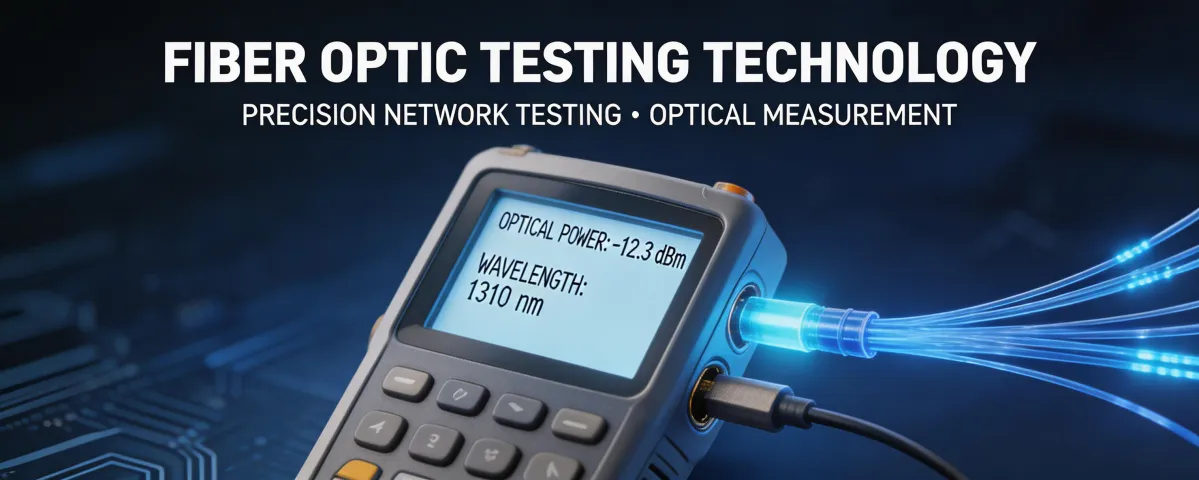
I brought in two pieces of EXFO gear that night: the Maxtester for the Ethernet layer testing, and their rugged FTB-1v2 platform with an OTDR for the physical layer. I set the Maxtester to generate a realistic traffic load simulating the hospital's peak-hour data flow—something their existing passive monitoring couldn't replicate. The test immediately started showing incremental CRC errors. Not enough to down the link, but enough to explain the drift the clinical vendor saw. Traffic scheduling inside the Cisco switch was actually masking the problem by discarding the bad packets at Layer 2.
"The difference between green lights and a healthy network is the difference between a check engine light that's off and a car that can actually drive 1000 miles." I've said this to clients a ton of times.
The OTDR Discovery
So we had our target: the physical link. But standing in that hospital's IT comms room at 3:00 AM, we didn't know where the problem was. The dark fiber span ran through three splice enclosures across 14 km. I fired up the EXFO FTB-1v2 OTDR and ran a bi-directional test. This is key: a single-direction OTDR trace can miss reflective events. (This was true ten years ago when OTDRs had lower dynamic range—surprisingly, many techs still run single-direction tests out of habit. That's changed with modern units, but the old practice persists.)
The trace revealed an 0.8 dB loss event at 6.7 km—far higher than the 0.3 dB the design spec allowed. The event was a bad splice somewhere in a mid-span enclosure. The physical and logical layer issue was, in fact, a tiny piece of dirty fiber. The OTDR also showed a small but measurable reflection at the same point—a 'ghost' if you will, that a simple power meter wouldn't catch.
Note to self: always run bi-directional OTDR traces, even if you're in a hurry. This one thing saved us.
Here's a quick reference on optical event degradation (Industry standard per Telcordia GR-196):
- 0.0–0.3 dB: Acceptable for most applications (standard splice).
- 0.3–0.5 dB: Marginal; re-splice recommended in new builds.
- 0.5+ dB: Failure; will cause issues under load or temperature shift.
- Reflectance < -50 dB: Good (mechanical splice or connector).
The Sprint to Daylight
We traced the 6.7 km spot to a manhole. The fiber provider's emergency team met us there an hour later. The splice inside the closure had been contaminated—likely during a recent installation by the building contractor who had accessed the vault earlier that week without the provider's knowledge. A simple cleaning and re-splice took 22 minutes. Power levels and OTDR traces returned to spec.
After that, we ran the Maxtester again with the hospital's actual traffic load: zero CRC errors over a 15-minute 10 Gig sustained traffic test. The clinical vendor ran their integration test: all green, no drift. The go-live was back on track.
So glad I ignored the Cisco switch's 'LAN Loss' indicator. Almost relied on only the enterprise gear alone, which would have meant scrubbing the deadline and taking a $50k hit. Dodged a bullet.
"This is why small investment in a dedicated field tester pays for itself in one emergency. A standard 3rd party dark fiber circuit often doesn't have the granularity of your own full-suite test heads." (Source: EXFO Application Note, 2024).
Bottom Line: What HeartGuide Taught Me (and Taught Them)
We delivered the project on time. But the real win was that the hospital changed its network provisioning policy. Now, before any new 7.1 or clinical system goes live on their Cisco network, they require a full EXFO optical layer certification—not just an SFP-based link check. They treat the network transport as its own system, not just an appendix to the switch. That saved their next deployment from a similar near-miss just last quarter.
In my experience, the difference between a survivable emergency and a catastrophic failure often comes down to 2 things: the right test equipment (and the courage to question a 'green light' from your core gear). If you are a network engineer scaling new services, trust but verify. Don't just ask 'Is the link up?' Ask 'What does traffic look like under load? What does the fiber look like at every meter?' Your deadline might depend on it.
Prices as of January 2025; verify current EXFO Maxtester pricing at exfo.com. The FTB-1v2 platform base cost varies $5k–$15k depending on modules. For this scenario, total emergency diagnostics (logistics, two team members, tool kit) ran $2,400 for the 8-hour turn. The alternative breakdown penalty was $50,000.