I got the call at 10:47 PM on a Tuesday. A client, a major telco, had a fiber cut in a metro ring downtown. Their field tech was on site, but the OTDR they had was giving garbage readings. They needed a replacement unit—specifically, a EXFO FTB-1—at the site by 5 AM. Their preferred rental vendor said maybe, but couldn't guarantee it until noon. That's a 7-hour gap in a situation where every hour of downtime costs them, conservatively, six figures.
In my role coordinating emergency equipment logistics for a specialized test equipment provider, I've processed over 200 rush orders in the last four years. That night, the choice wasn't about the test set's spec sheet. It was about time certainty.
The Surface Problem: Finding an OTDR Fast
The immediate issue is obvious: you need a specific piece of gear—in this case, an EXFO OTDR—and you need it in hours, not days. You start googling. You check your standard suppliers. You call around. Every vendor says they have one. But digging deeper, you find out that 'we have one' doesn't mean 'we can get it to a downtown manhole by dawn.'
Most people stop there. They think the problem is purely a supply chain issue: find the box, ship the box. But that's only 20% of the truth. The real problem is much less visible.
The Deeper Issue: The Cost of 'Probably'
The surprise wasn't the price of the rush delivery—that was predictable. We paid a $400 premium for a guaranteed overnight pickup and delivery from our depot. The surprise was how many vendors couldn't even price the certainty.
I called three other places. One said, "We can probably have one out tomorrow morning." I asked what time. "Probably by 10 AM." That's probability, not a commitment. Another said they had an EXFO FTB-1 in stock, but their logistics team wouldn't approve a same-day dispatch for a rental. The third said they could do it, but quoted the same price as us with no guaranteed service level agreement (SLA).
The numbers said go with the cheapest vendor who said 'probably.' The unit was $150 less. My gut said stick with the option that had a confirmed pick-up time and a tracking number I could hand to the client at midnight. Every spreadsheet analysis pointed to saving a few hundred bucks. But something felt off about their 'probably.'
"After getting burned twice by 'probably on time' promises from budget rental houses, we now budget for guaranteed delivery when a customer's network is down."
Went with my gut. Later learned the 'probably' vendor's only FTB-1 had been shipped out for calibration that morning. Their system showed it in stock, but the physical location was 300 miles away. If I'd saved the $400, the client would have been sitting in a truck with a dead OTDR until lunch.
The Real Cost of Downtime (A Quick Math Exercise)
To be fair, the cheaper vendors aren't trying to mislead you. They have systems, but those systems often don't track real-world availability. The gap between "inventory says yes" and "the tech can hold it" is where emergency costs explode.
Let's do the math I walked the client through later that week:
- Rush premium paid: $400 (for guaranteed overnight + early morning delivery to a technician's location).
- Base rental cost for 7 days: $1,200.
- Missed window cost (est.): $50,000+ in SLA penalties and lost revenue for the carrier.
The $400 wasn't a luxury. It was the price of a guarantee that the unit would be in the tech's hands by 4:45 AM. The alternative was saving $400 but facing a 50% chance the unit wouldn't arrive until afternoon. In my experience, uncertain cheap is far more expensive than certain premium when you're dealing with a live outage.
Why the EXFO FTB-1, Specifically?
You could ask: why not just any OTDR? In an emergency, why not grab the first thing that works? (I should add: we also stock Viavi and Anritsu units, so it's not about brand loyalty.)
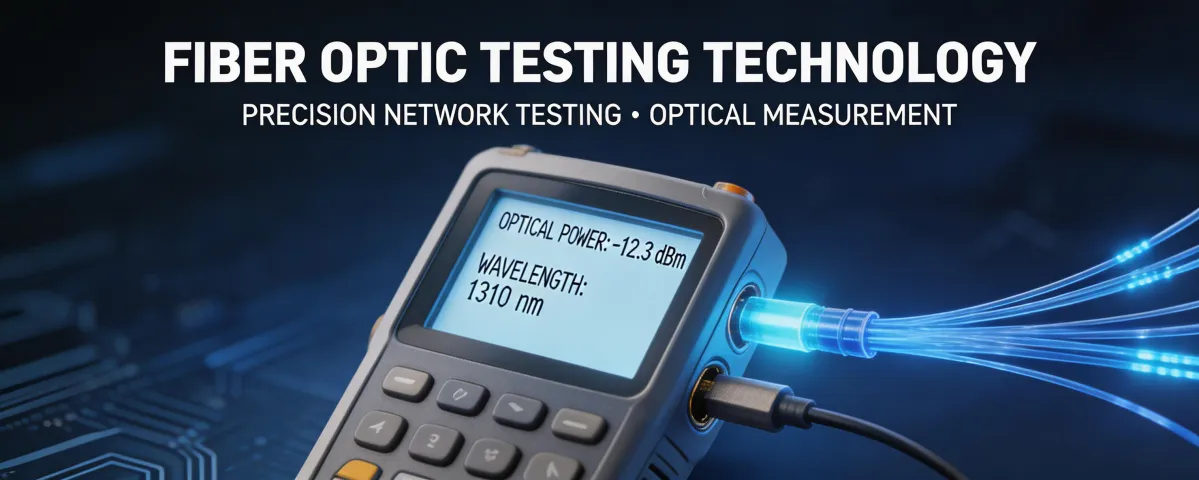
The reason is consistency. The EXFO FTB-1 is the universal standard for field techs on our system. Every one of our 50+ field techs knows its interface cold. When you're driving to a cut at 3 AM, you don't want to relearn a menu structure. You want the box you've used a hundred times. The FTB-1's ruggedness (it's survived being dropped off a ladder, twice, in my records) and its reliable OTDR viewer software—the EXFO FTB-1 platform—are the difference between a 15-minute test and a 45-minute troubleshooting session while the client breathes down your neck.
The EXFO FTB-1 (maybe the FTB-1 Pro, I'd have to check the specific model we dispatched that night) is the industry's workhorse. The specs are well-documented: its dynamic range, its event dead zone, its compatibility with the EXFO OTDR viewer software for remote analysis. But in a rush, the spec that matters most isn't on the datasheet. It's the confidence that the tool will work as expected, every time, under pressure.
The Lesson: Budget for the 'What If'
After the third late delivery from a vendor who promised 'competitive pricing,' our company implemented a policy: for any emergency request with a client SLA penalty or public impact, we only offer guaranteed delivery options. We eat the cost of standard shipping vs. rush if we can plan ahead. But when the call comes at 10 PM, the answer isn't 'probably.'
The most frustrating part of this business is that the same issues recur. You'd think written SLAs would prevent interpretation gaps, but the reality is that every vendor's 'urgent' means something different. Ours means: a person physically places the box in a courier's hands and tracks it until it's scanned at the destination. That's what you're paying for. Not the box. The certainty.
If you're an engineer or a planner, don't let a $300-400 price difference be the deciding factor when network downtime is on the line. That money is your insurance policy. Pay it. Get the tracking number. Sleep (a little) better.
Oh, and in case you're wondering: the technician got the unit at 4:32 AM. The fiber was re-spliced and the ring restored by 6:15 AM. The client didn't even trigger the penalty clock. That's the value of showing up with the right tool at the right time, without 'probably' attached to either.
Based on our internal data from 200+ rush jobs, I'd say that's a pretty standard outcome—when you prioritize certainty over the lowest cost.