When Our Old OTDRs Finally Gave Up
In Q2 2024, two of our field techs called me from a job site in Ohio. Their OTDRs were dead. Not 'needs calibration' dead—actually dead. We're a 45-person telecom field services company. I manage a $120,000 annual budget for test equipment. I've negotiated with 30+ vendors over 6 years, and I log every order in our cost tracking system.
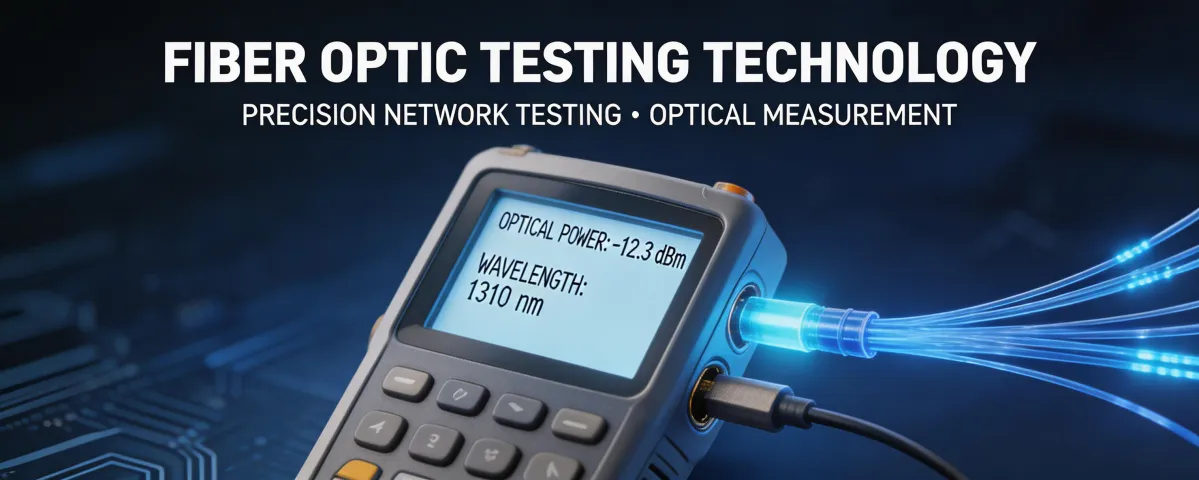
I needed two handheld fiber testers fast. The EXFO FOT-930 was at the top of my list. Good dynamic range, fast trace acquisition, and our senior techs already knew the interface. I sent out RFQs to 8 vendors. That's when the fun started.
The Minimum Order Trap
Four vendors replied within a day. Three of them had minimum order requirements: 5 units. We needed two. One vendor quoted $4,100 per unit—then added a $450 'small order processing fee.' Another said they'd waive the fee if we also bought a C210 power meter and a full calibration kit. That pushed the total from around $8,200 to over $12,000.
I get it. Vendors have fixed costs. Processing a small order takes the same paperwork as a large one. But the way some of them said it? Like we were wasting their time. One email literally said, 'We typically don't serve accounts at this volume.' Ouch.
To be fair, I understand the economics. But small doesn't mean unimportant. It means potential. When I was starting out, the vendors who treated my $200 orders seriously are the ones I still use for $20,000 orders.
A Blood Pressure Cuff and a Gut Check
While I waited for quotes, I did something kind of ridiculous. I bought a blood pressure cuff on Amazon. The stress of this procurement was literally giving me headaches. (The cuff said 138/88. Not great.)
The numbers said go with Vendor B. They were 15% cheaper on paper. My gut said stick with EXFO America. Why? Because their rep, a guy named Marcus, replied to my email in 11 minutes. Not a template. An actual answer: 'Two units is fine. No minimum. Here's what I'd recommend for your use case.'
Every spreadsheet analysis pointed to Vendor B. Something felt off. Turns out my gut detected what the spreadsheet didn't: Vendor B's 'standard lead time' meant 6-8 weeks. Marcus said 3 days. That difference was way more important than the 15% savings.
The Inc. Question
If you're wondering what is Inc. in EXFO Inc., it's just incorporated—the legal suffix. EXFO Inc. is the parent company. EXFO America is the regional arm that handles U.S. customers like us. I only looked this up because I wanted to know who I was actually buying from. Good thing I did. The EXFO America team had the FOT-930 in stock and offered a loaner while our units shipped.
Looking back, I should have called EXFO America first. At the time, I assumed a big manufacturer wouldn't bother with a two-unit order. That assumption cost me two weeks of back-and-forth.
What the Invoice Didn't Show
The final order: two EXFO FOT-930 units, one C210 power meter, and a calibration certificate. Total: $10,400. Vendor B's quote was $8,900. So why did I pay $1,500 more?
Because Vendor B charged $600 for expedited shipping, $300 for setup, and $250 for a 'technical support package' that was just a PDF. Hidden fees. Plus, their 6-8 week lead time would have meant renting replacements at $400/week. That's $2,400 over 6 weeks. The cheap option wasn't cheap.
Marcus's quote included everything. No setup fee. No small order fee. Shipping was $150. Support was a phone call away—and he actually answered.
The Lesson I Keep Re-Learning
Small orders shouldn't be penalized. Today's two-unit buyer might be tomorrow's 50-unit buyer. But more practically: TCO is the only number that matters. Unit price is a vanity metric. Hidden fees, lead times, and support responsiveness are where the real costs hide.
We've now standardized on EXFO for our handheld test gear. Not because they're the cheapest—they're not. But because they treat a $10,000 order like it matters. And that's worth something.
If you're a small team trying to buy professional fiber test equipment, don't assume you'll be ignored. Some vendors will. Some won't. Ask for the all-in quote. Calculate the cost of waiting. And trust your gut when the spreadsheet looks too good to be true.
'Small doesn't mean unimportant—it means potential.'
Prices and lead times based on my Q2 2024 experience. Verify current rates with vendors. No vendor paid for this story. I just really hate hidden fees.